Logo

Sustainable Metals
Collection from the Ocean Floor

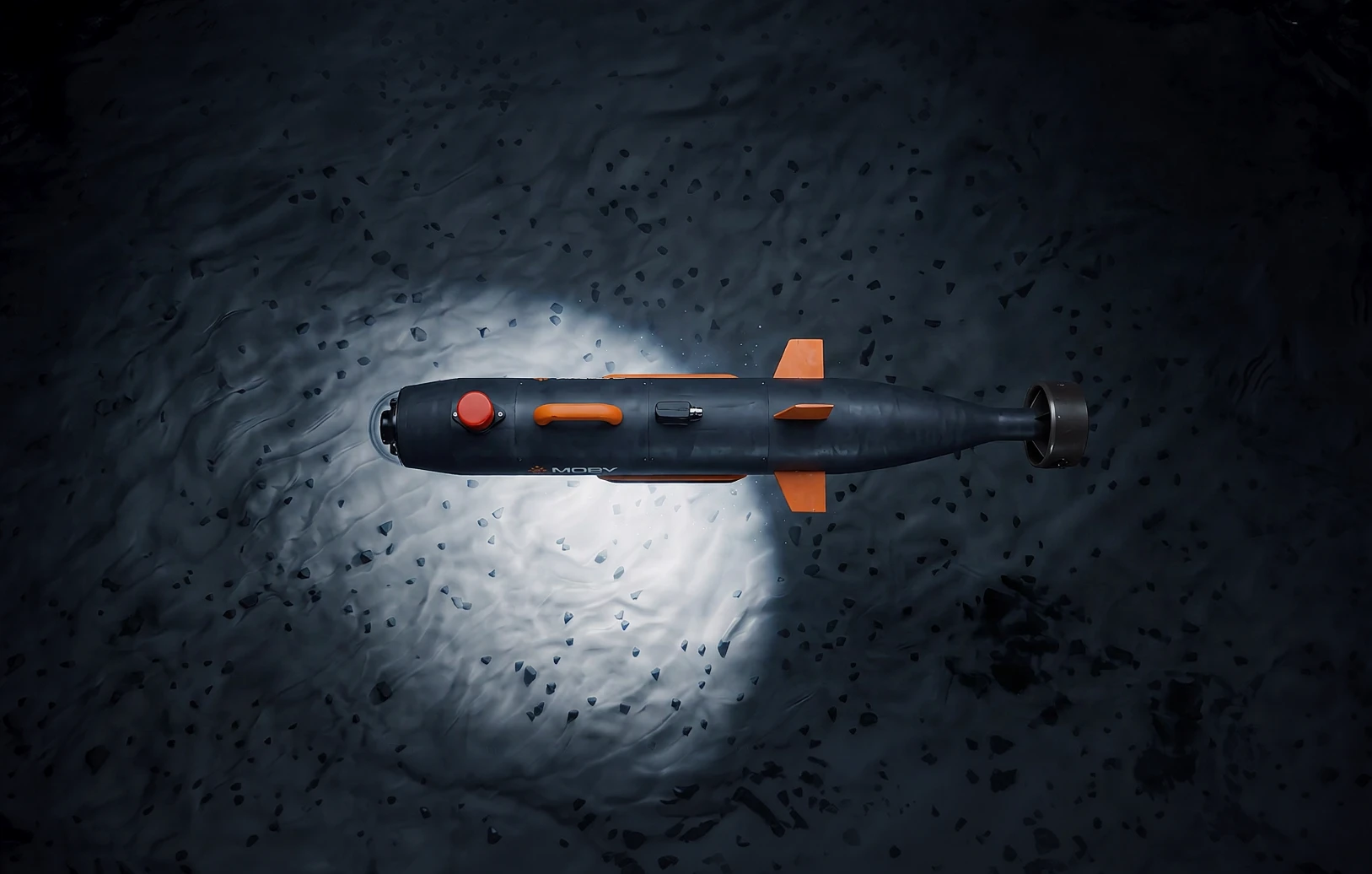
MOBY’s deep-sea robots recover minerals efficiently while minimizing environmental impact and operating costs.

01

Engineered for
Extreme Ocean Depths

Engineered for Extreme
Ocean Environments

Depth-rated to 6000 m for reliable performance in the harshest marine environments.

04

Coordinated
Swarm Intelligence

Multiple autonomous robots work collectively for continuous, dependable performance in dynamic environments.

02

NVIDIA AI-
Powered Vision

Onboard vision system delivers near-perfect accuracy in nodule identification and seafloor mapping.

03

Highly Scalable
Architecture

Modular pod design provides
efficient expansion for large-
scale operations.

Why Now?
Why Now?

Demand Growth

Geopolitical Risk

Human Rights Violations

Ocean Opportunity

01

Global demand for copper, nickel, manganese, cobalt, and other critical materials is accelerating — driven by electrification, AI, and clean energy technologies — and is expected to grow by 500% by 2050.

02

Over 70% of global supply is concentrated in politically unstable or monopolized regions—threatening long-term access and strategic independence.

03

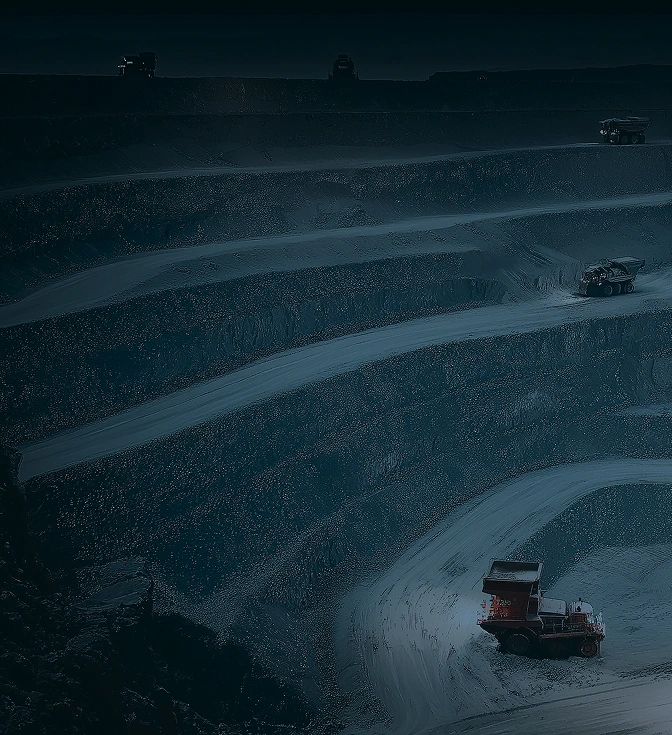
Traditional mining leads to deforestation, pollution, and unsafe labor practices—making it increasingly costly and socially unacceptable.

04

The deep sea holds an untapped, high-purity resource base. If approached with care and responsibility, it offers a cleaner, more scalable path forward.

01
Demand
Growth

Global demand for copper, nickel, manganese, cobalt, and other critical materials is accelerating — driven by electrification, AI, and clean energy technologies — and is expected to grow by 500% by 2050.

02
Geopolitical
Risk

Over 70% of global supply is concentrated in politically unstable or monopolized regions—threatening long-term access and strategic independence.

03
Human Rights
Violations

Traditional mining leads
to deforestation, pollution, and
unsafe labor practices—making
it increasingly costly and socially unacceptable.

04
Ocean
Opportunity

The deep sea holds an
untapped, high-purity resource
base. If approached with care and responsibility, it offers a cleaner,
more scalable path forward.

Our Technology

Patent Pending

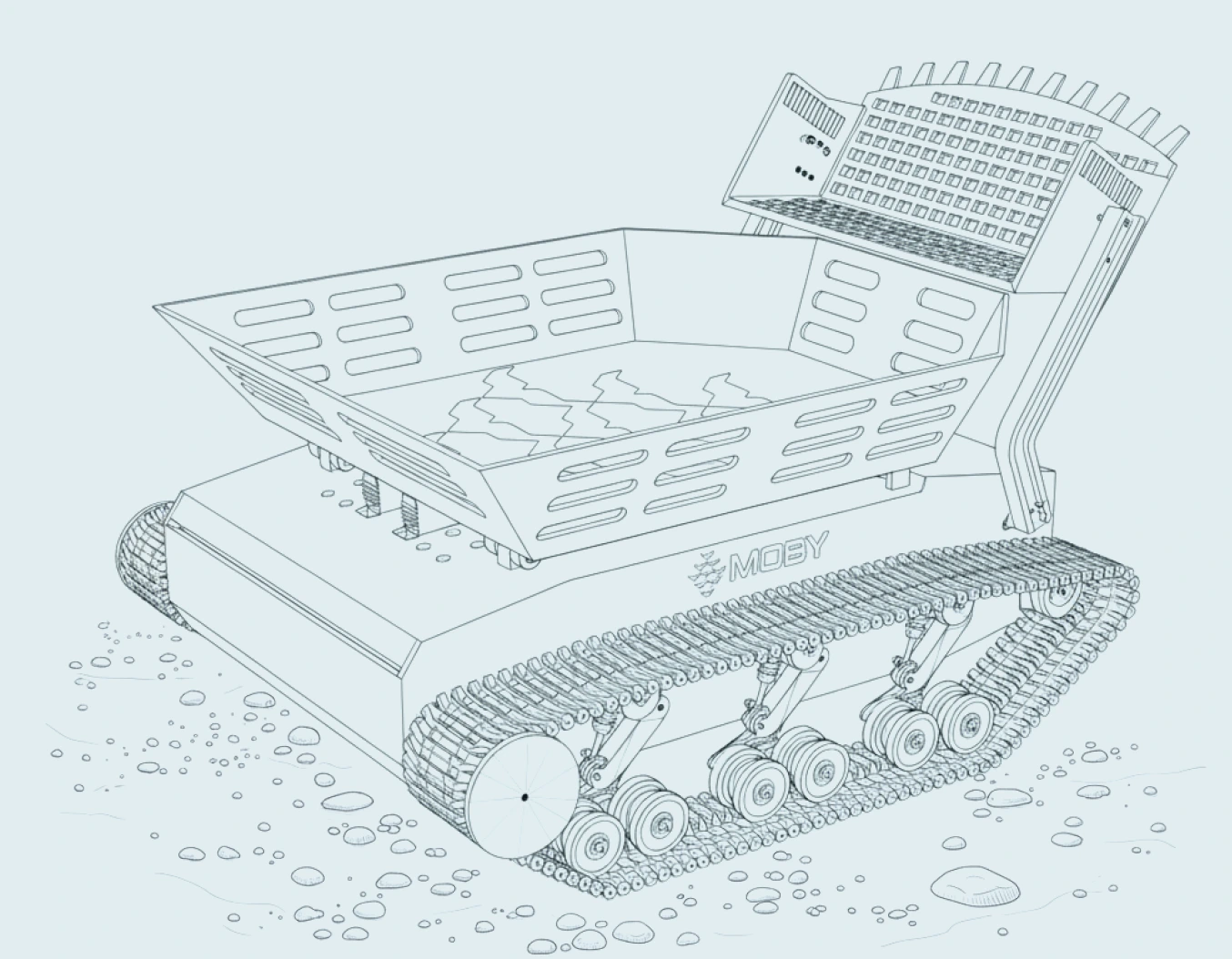
SCOOBEE

(Autonomous Seafloor Crawler)
Card 1
Patent Pending

NEMO

(Autonomous Underwater Vehicle)
Card 2
Patent Pending

SmartLift

(Collection & 
Communication Hub)
Card 2
Patent Pending

Mineral Production Platform (MPP)

(Autonomous 
Riser System)
Card 2

How It Works

A step-by-step process for sustainable nodule extraction
01 STEP
Scout & Map

Scout & Map

NEMO AUVs autonomously scout and map the seabed, identifying optimal nodule concentrations.
02 STEP
Seafloor Pod Deployment

Seafloor

Pod Deployment

A swarm of SCOOBEE crawlers, enclosed in the SmartLift are deployed to the seafloor at depths of up to 6,000m.
03 STEP
Nodule Collection

Nodule Collection

The SCOOBEEs, guided by computer vision, work as a swarm to collect nodules, and deposit them into the SmartLift while actively avoiding marine life and minimizing environmental disturbance.
04 STEP
Surface Retrieval

Surface Retrieval

A solar powered autonomous Mineral Production Platform (MPP) lifts the filled SmartLift and crawlers to the surface, where they are crane-lifted onto the vessels. The nodules are then transferred into containers.
05 STEP
Port Transfer

Port

Transfer

A Mineral Support Vessel (MSV) services a field of MPPs, and transports the minerals to a trans-shipment point for distribution.

MOBY's Integrated AI-
Powered Collection System

Our proprietary technology stack combines cutting-edge robotics, computer vision, and AI to achieve unprecedented efficiency and environmental protection.
No deforestation
No toxic tailings
No community displacement
Minimal sediment disturbance
Minimal noise and light pollution
SmartNet
Technology

Proprietary mesh collection system optimized for minimal seafloor disturbance

Dyneema mesh net allows water and fine sediment to pass through while capturing only nodules, eliminating tailings and polluted water columns

View details
Advanced
AI & Computer Vision

NVIDIA GPU-powered neural networks for real-time seafloor mapping and object recognition

Multi-spectral imaging identifies nodules with 90% accuracy even in low visibility conditions

Autonomous decision-making optimizes collection paths based on nodule concentration

Swarm coordination algorithms enable multiple units to work together efficiently

View details
Integrated
Collection System

Autonomous underwater vehicles (AUVs) provide mobility and scanning

SmartNet collection system gathers nodules with minimal environmental impact

Central processing unit coordinates the fleet operations and data analysis

Data from each deployment informs future updates to the machine learning models, improving long-term performance.

View details

Leadership Team

Advisory Board

Mike Fiuk
Harvard, US Army, Darkhive
Dr. Matt Collette
University of Michigan Naval Architecture
Fred Crosetto
Ammex, iSupport, YPO
Thanh Nguyen
Johnson Controls, Farasis Energy, 6K
Co-Founder & CEO — MBA

Alexander Petersen

Forbes 30 Under 30

Seasoned entrepreneur with an MBA and international business expertise. Extensive experience in corporate finance and business strategy.

Co-Founder & CTO — PHD

Nate Clemett

PhD, Naval Architecture and Marine Engineering

Naval Architecture & Marine Engineering PhD, MS in Robotics, USCG licensed captain. Former Field Engineer at UW Applied Physics Lab. Experience in transatlantic sailing, in-situ Arctic Ocean research, and deep-sea tech.

partners
FAQ

Can't find something
or have a problem?

Check out this section. If you don't see
your answer, please contact us!
How deep can MOBY robots operate?

Our robots are designed to operate at extreme ocean depths, with a depth rating of up to 6,000 meters, allowing safe and efficient exploration and collection of nodules from the deep sea.

How does MOBY ensure environmental sustainability?

MOBY’s SmartNet technology minimizes seabed disturbance by 90-95%, reduces carbon footprint by 93%, and avoids direct harm to marine life using AI-driven fauna avoidance protocols.

What types of metals can MOBY collect?

Our autonomous system collects critical metals such as nickel (Ni), copper (Cu), cobalt (Co), and manganese (Mn) simultaneously, enabling diversified revenue streams while maintaining environmental responsibility.

How scalable is the MOBY system?

Our modular design allows multiple fleets to operate simultaneously from various vessels. The system is endlessly scalable, offering unmatched flexibility and efficiency compared to traditional systems.

How does the AI-driven collection process work?

NEMO scouts the seabed, while SCOOBEEs collect nodules. AI coordinates swarm operation, optimizes paths and continuously improves collection efficiency with minimal environmental impact.

Get in touch

MOBY Robotics provides a cost-effective and highly scalable mineral recovery solution that can be customized to meet your specific requirements. To learn more or get in touch fill out the form and we will contact you.
By subscribing, you agree to our Privacy Policy.
Thank you! Your submission has been received!
Oops! Something went wrong while submitting the form.

News

Jun
 
25
,
 
2026
Partnerships

MOBY and ABS Sign MOU

Jun
 
25
,
 
2026
Company News

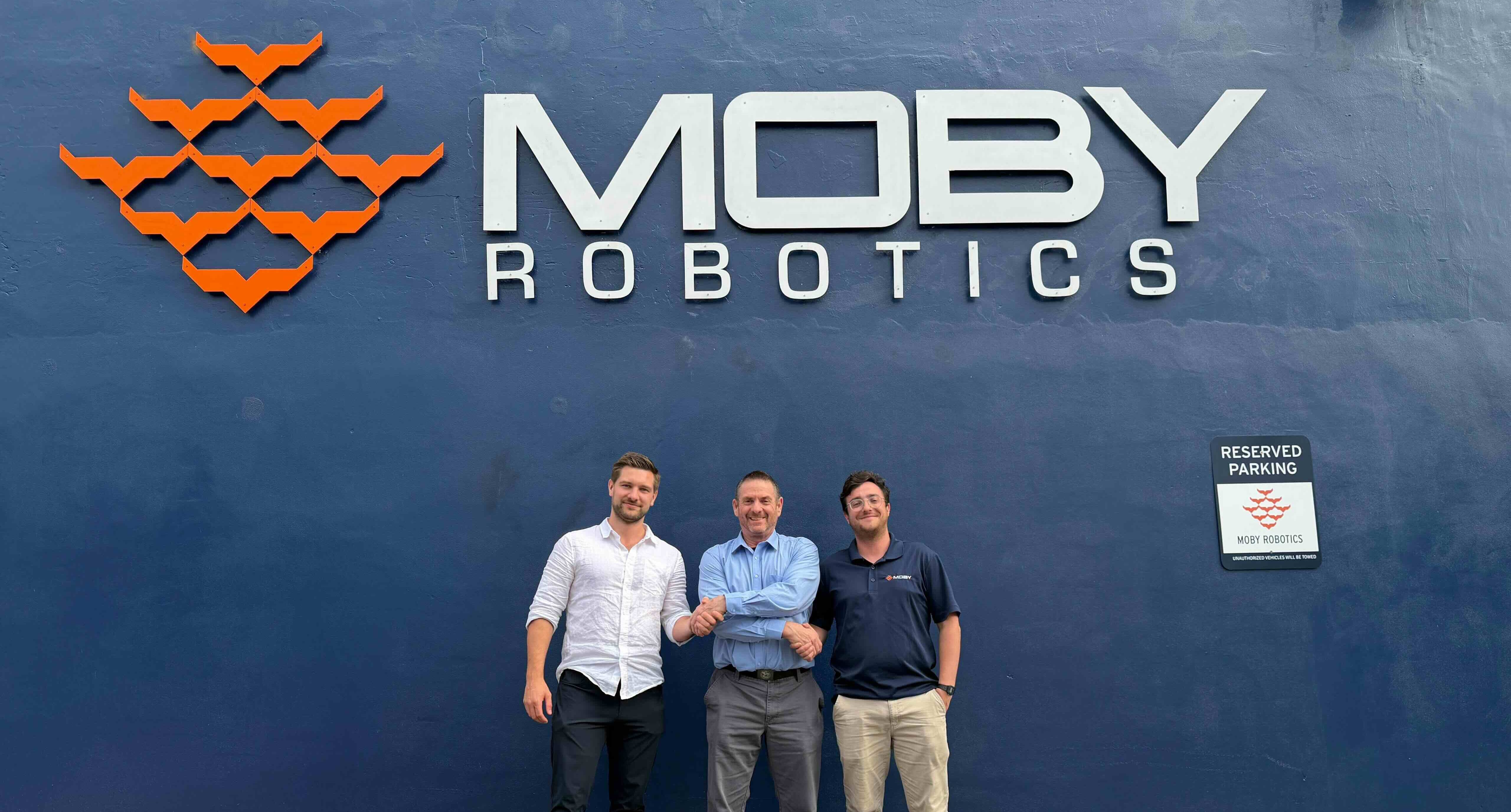
MOBY Robotics Opens Miami Headquarters

May
 
07
,
 
2026
Company News

Welcoming Andy Lipman as Chief Offshore Officer

Get in touch

Fill out the form below and our team will contact you.
By subscribing, you agree to our Privacy Policy.
Thank you! Your submission has been received!
Oops! Something went wrong while submitting the form.
Close Modal